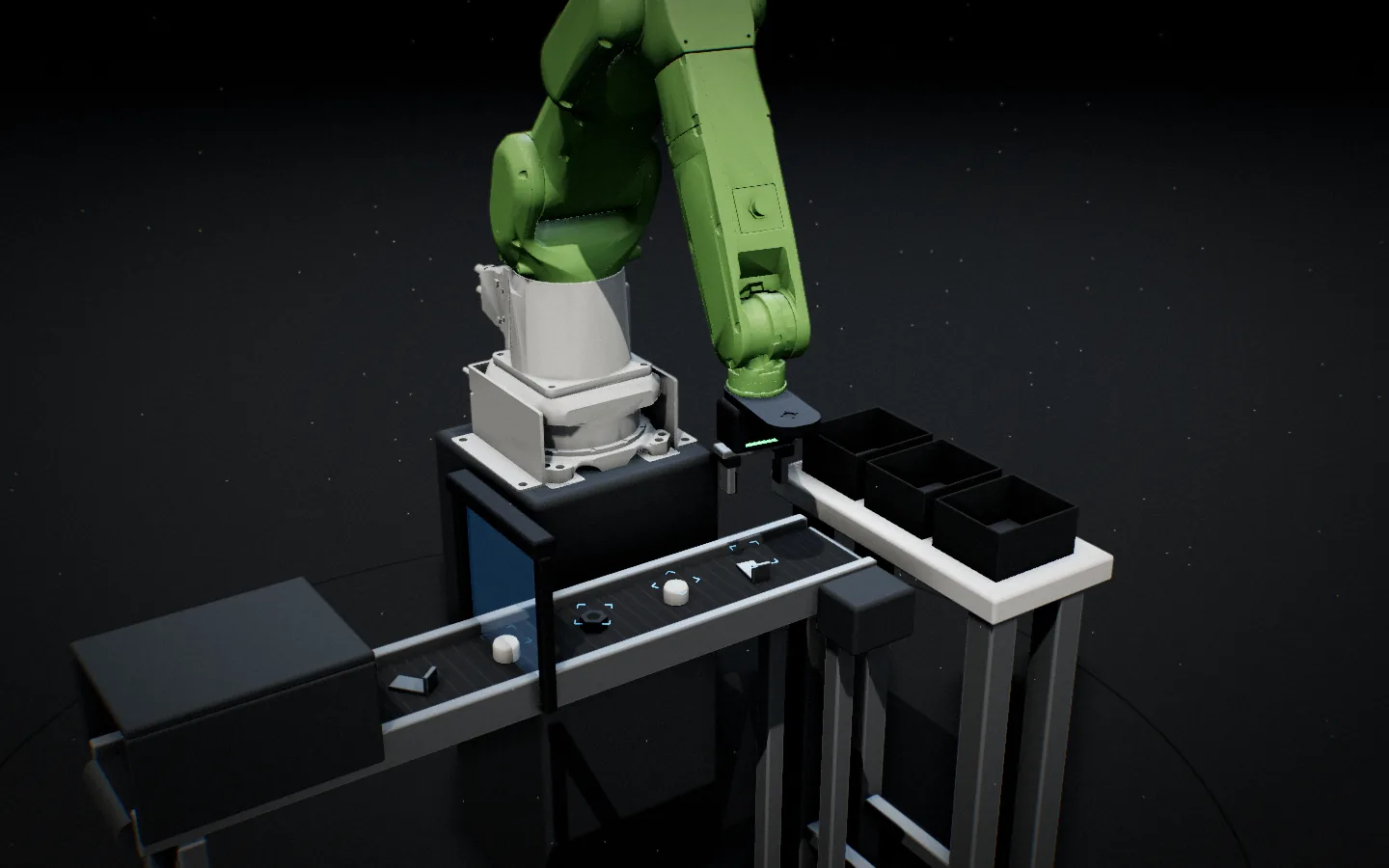

Our first program automates a qualified process for a U.S. medical device manufacturer.

Talk to us

Autonomous robotic cells, built to generalise

VIHA unites perception, planning and validated execution in one platform. New work is composed from a shared library of skills and verified before a robot moves, so automation extends across parts, processes and production lines. Every run is recorded, end to end.

Understands the cell before it moves.

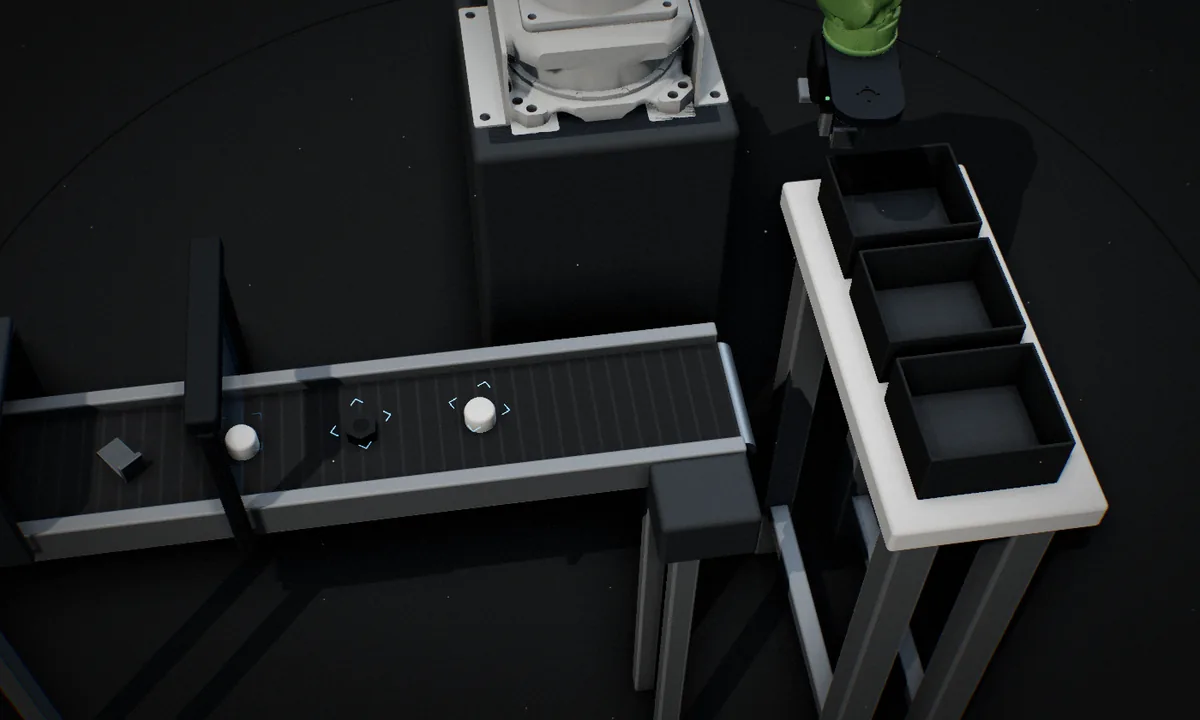
Each installation is described as a scene: its robots, tools, fixtures and named locations. Perception resolves what is physically present, in three dimensions, and every observation is checked for freshness and consistency before the platform acts on it. Plans refer to roles and places rather than coordinates, so proven work carries from one cell to the next.

Overhead view of a VIHA cell with located parts marked on a conveyorPart located6-DoF poseStation B
  • SceneDeclared per installation
  • EvidenceChecked before use
  • PlansAddressed by role and place

Composed from skills, not programmed from scratch.

Work is expressed as a graph of general-purpose skills. Before execution, every plan is validated for structure, reachability and data flow, and every trajectory is checked before it is admitted. New requirements reuse proven building blocks, which shortens the path from a new process to a running cell.

Plan validation Before any motion

  • Plan structurePassed
  • Skill registryPassed
  • ReachabilityPassed
  • Data flowPassed
  • Trajectory admissionPassed

Traceability by design

Every run leaves a complete record.

Sessions, events, task states, results and execution traces are written as structured data on every run. Completed work is kept in a queryable history, giving engineering, quality and operations teams one shared, auditable account of what the cell did and why.

6-DoF
Object pose
One
Perception contract
End to end
Run traceability
Run recordComplete
  • Session metadataJSON
  • Event streamLOG
  • Task statesJSONL
  • ResultsJSONL
  • Execution tracesJSONL
  • Run historySQL

Built to generalise.

Talk to an engineer
A robot arm rendered as a cloud of measured points
ObserveDetectPickPlaceMoveMeasureActuateand more

One skill language for every process

Handling, assembly, finishing and inspection are expressed in the same vocabulary of skills and run on the same platform, so each new process begins from what is already proven.

Local GPUReadyDedicated serviceReadySimulatedReady

Perception that plugs in

Perception services sit behind one contract and run on local hardware or dedicated compute, so sensors and models can change without rewriting the work.

Simulation and floor, one workflow

Every task runs in simulation first, with the same plan, the same checks and the same record as on the production floor.

Operators remain in command

A browser-based console presents live views, perception results and run state. An interrupted step holds until an operator decides how to proceed.

Fail-closed designOn-premises operation

Engineered for the production floor.

Safety is part of the platform’s architecture, not an addition to it. Faults are classified by severity and handled accordingly, operator and hardware stops share a single cell-wide line, and a stopped cell keeps hold of what it carries. The platform runs on your local network; cloud compute is optional, never required.

Discuss your requirements

A clear path to production.

01

Assess

We study the process, the parts and the constraints of your floor, and define precisely what a cell must achieve.

OutcomeScope and feasibility

Start a conversation
02

Prove

The cell is built and proven in simulation, then commissioned on site against acceptance criteria agreed in advance.

OutcomeA validated cell

Start a conversation
03

Scale

Proven skills, plans and scenes carry to further lines and sites, with every run on record from the first.

OutcomeRepeatable rollout

Start a conversation

Frequently asked questions

What does VIHA do?

VIHA designs and deploys autonomous robotic cells, and builds the platform that runs them: perception, planning, validated execution and a complete record of every run.

Which processes can the platform automate?

The platform is domain-neutral. Work is described as a graph of general skills, so handling, assembly, finishing and inspection are expressed in the same way. Every engagement begins with an assessment of whether a robotic cell is the right fit.

How is a new task introduced?

A new task is composed from the existing skill library, validated for structure, reachability and data flow, and proven in simulation before it runs on the cell.

How is safety handled?

Plans and trajectories are checked before execution, faults are classified by severity, operator and hardware stops share one cell-wide line, and outputs fail closed. After an interruption, the cell waits for an operator decision rather than retrying on its own.

Where does our data reside?

The platform runs on your local network and records each run on site. Cloud compute is optional and used only where you configure it.

What is recorded during a run?

Session metadata, events, task states, results and execution traces, with completed work kept in a queryable history for engineering and quality review.

How do we begin?

Tell us about the process you want to automate. We will tell you plainly whether a robotic cell fits, and what it would take.

Automation that carries from one line to the next.

Let’s talk about your operation.

Tell us about the process you want to automate. We will tell you plainly whether a robotic cell fits, and what it would take.

hello@vihalabs.com

VIHA, Inc. · Dallas-Fort Worth, Texas

Write to us